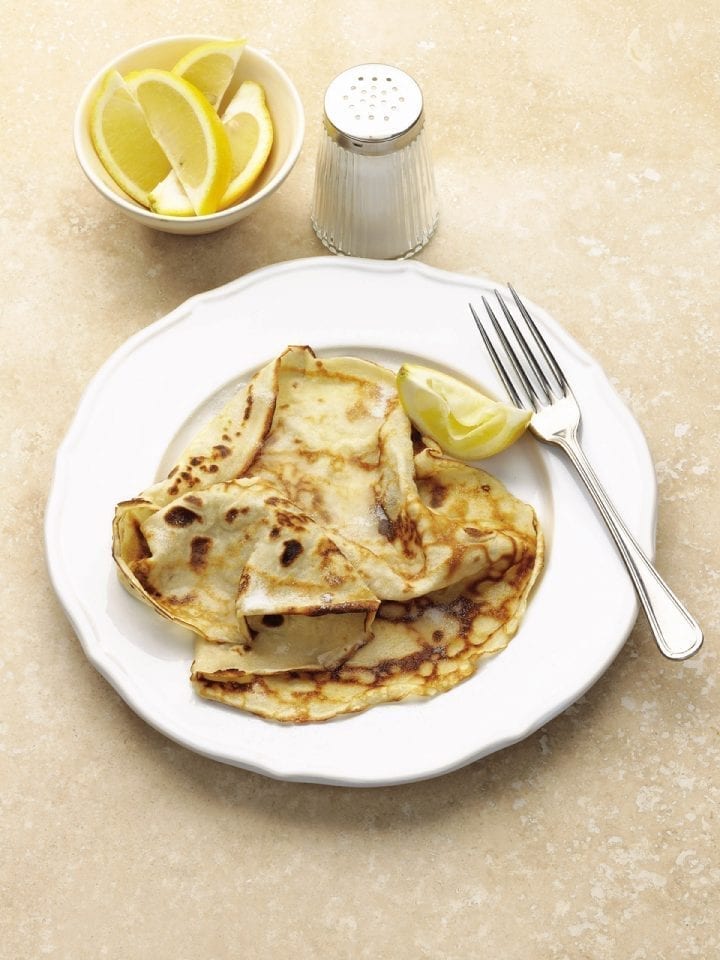
Looking to learn how to make pancakes? Anyone can give our easy pancakes a go and get flippin’ fantastic results. Whether it’s Pancake day, Valentine’s Day or you simply fancy pancakes for dessert, follow our step-by-step recipe guide for basic (and easy!) crêpe-style pancakes.
- Ideal pancake batter ratio: This proportion of liquid to flour will give you the right consistency to achieve thin, even pancakes.
- Classic, timeless recipe: Enjoy the taste of traditional British pancakes, with their lightly bronzed, lacy edges and tender texture.
- Quick and easy: Only four ingredients and 10 minutes are needed to whisk together this easy pancake batter.
We also have simple tips and tricks that will have you cooking up wafer-thin pancakes every time. Small details can really mean the difference between a lacklustre pancake and one that has everyone lining up for more. Now find your perfect pancake topping from our top 10…

Ingredients
- 125g plain flour
- 1 medium egg, beaten
- 275ml-300ml milk
- Vegetable or sunflower oil, for frying
Method
- To make the batter, sift the flour with a pinch of salt into a large bowl. Make a well in the centre, pour in the egg and slowly whisk in enough milk to make a smooth batter, the consistency of pouring cream. Rest for at least 20 minutes.
- Heat about a 28cm crepe pan or a smaller heavy-based frying pan over a medium heat. When hot, dip some kitchen paper in the oil and wipe across the surface of the pan. Add a small ladleful of batter and tilt the pan to swirl the batter evenly and thinly.
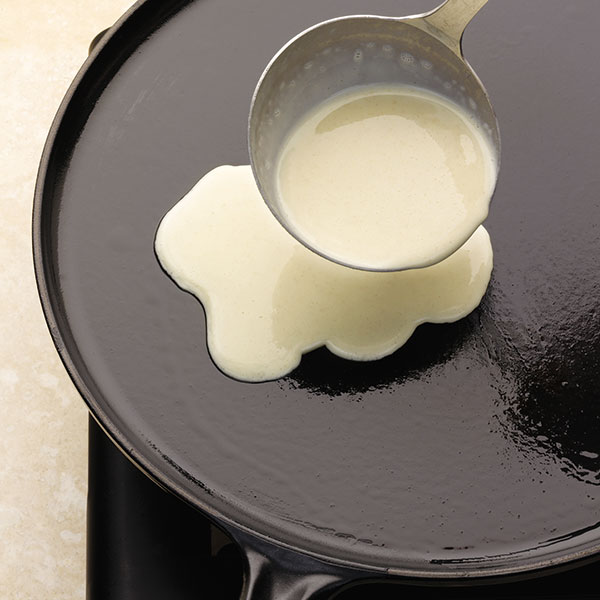
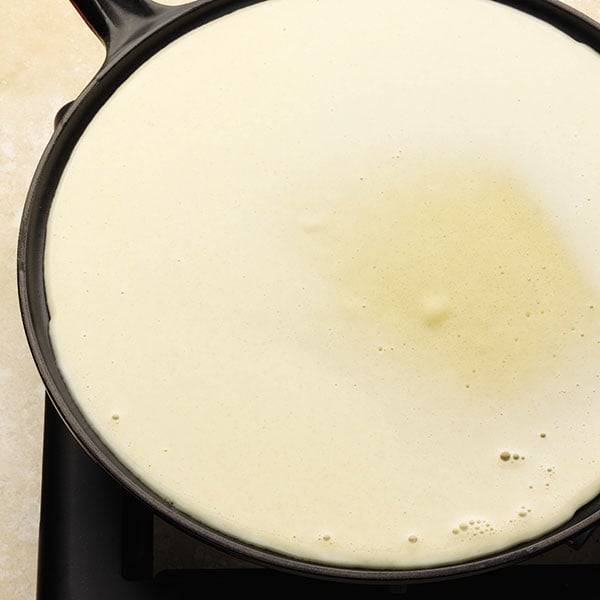
- Cook for 1-2 minutes, until the pancake is golden underneath.
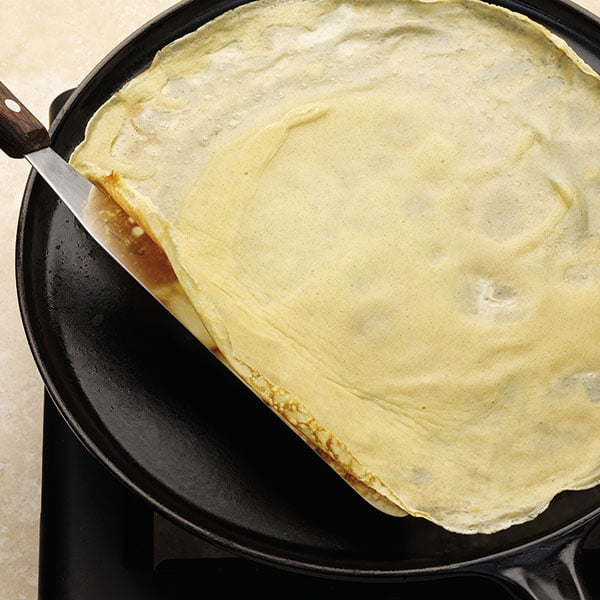
- Loosen all around the pancake with a palette knife. Flip over and cook for a further minute, until golden.
- Slide out onto a plate and repeat to finish up the batter – oil the pan between each pancake.
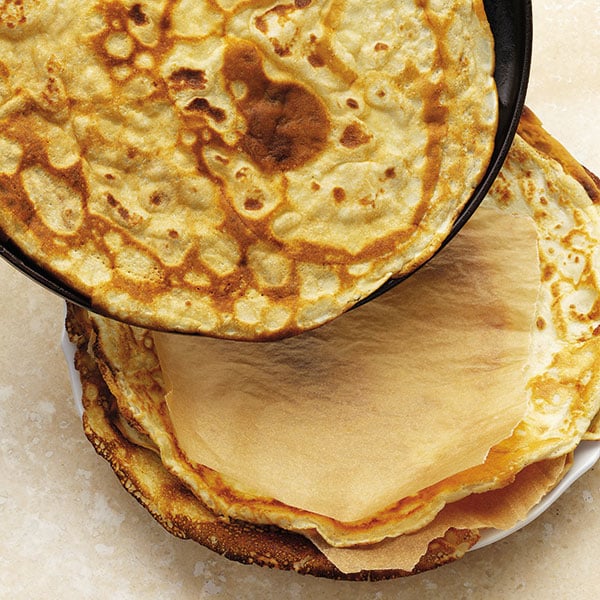
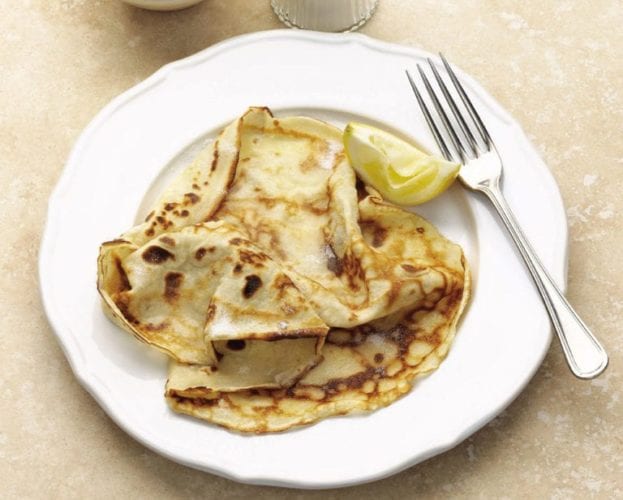
- Serve the pancakes with lemon wedges to squeeze over and sprinkle with caster sugar – or add whatever toppings your heart desires!
FAQs
You’re looking for a batter with the consistency of single cream.
You can double or treble our core recipe to make as many pancakes as you need.
Letting the batter rest for a few hours allows the gluten to relax and the starch in the flour to soak up the liquid. The result is a softer, lighter pancake. You can rest it overnight, chilled, but thin it down with a little milk before using.
Use a heavy-based, non-stick frying pan, as it will distribute a constant, even heat. A shallow lip means you don’t have to get too much height when flipping and you’re less likely to catch the pancake on the edge as it settles back down into the pan.
The pan needs to be properly hot before you start cooking. If you’re using butter for frying it needs to foam when it hits the pan, and oil should have a loose, shimmery consistency. Use a piece of kitchen paper or a silicone pastry brush to brush the fat over the base of the pan.
Allow the batter to cook on the first side for slightly longer than your instinct tells you (if in doubt, lift the edge with a palette knife to check the pancake has some colour). To flip, loosen the pancake with a palette knife, then slide it towards the far side of the pan before you toss. The other side needs slightly less cooking time.
Pancakes need to be eaten straightaway. Flip and eat. Work like a production line, taking turns. Roll or fold? Your choice.
Serve the pancakes with lemon wedges to squeeze over and sprinkle with caster sugar – or add whatever toppings your heart desires!
Nutrition
- 209kcals Calories
- 8.7g (1.9g saturated) Fat
- 7.2g Protein
- 27.5g (3.7g sugars) Carbs
- 0.1g Salt
For 1 large pancake
Leave a comment, question or tip