Paella mixta (chicken and seafood paella)
- Published: 19 May 25
- Updated: 2 Jun 25
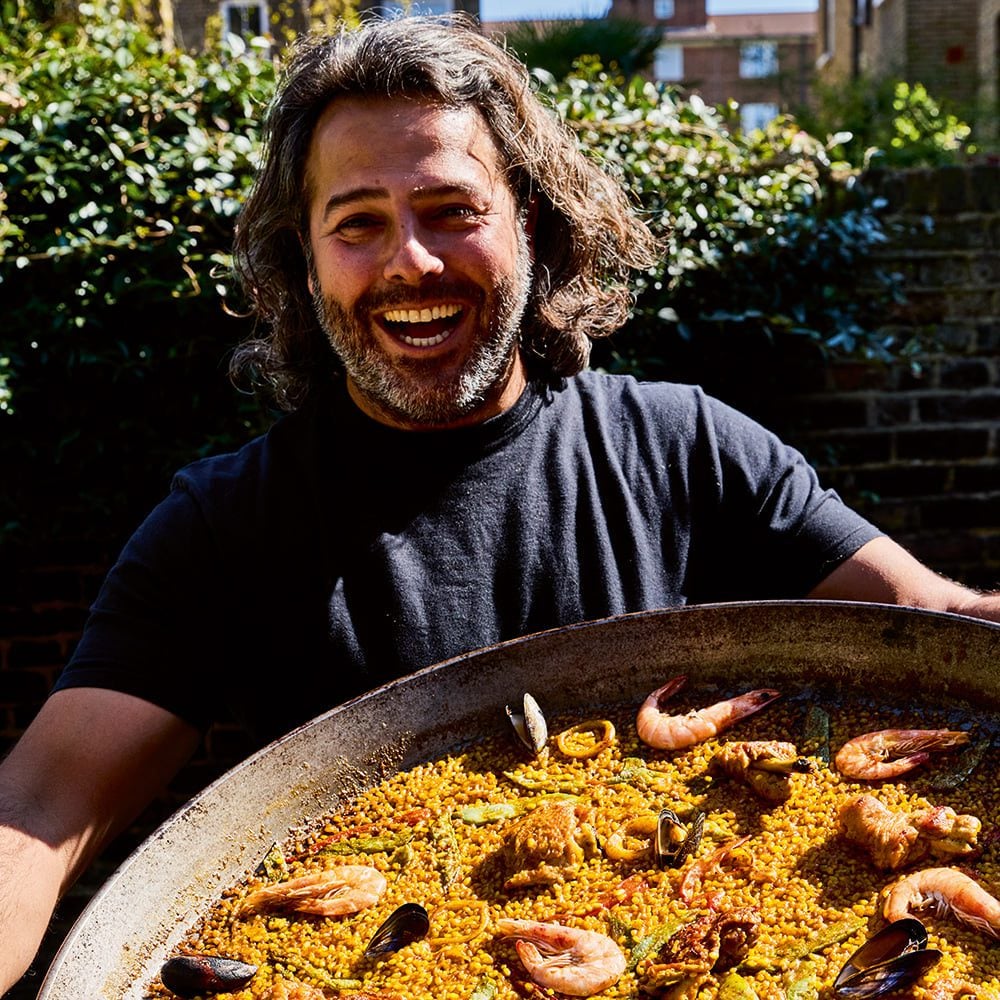
Paella mixta is a classic version of the beloved Spanish rice dish, packed with chicken and seafood. Spanish chef and paella expert Omar Allibhoy shows you how to make a paella mixta that’s guaranteed to kickstart any fiesta.
“This was my grandfather’s favourite paella,” says Omar. “Every year we would get together for his birthday in August as a family and go to a restaurant called Posada de San Miguel in Altea on Spain’s Costa Blanca to eat this dish. It’s where my passion for paella began; as a kid I would ask the chef to watch him in the kitchen, where huge paella pans were enveloped in flames from the burning logs below.”
How to make perfect paella mixta (chicken and seafood paella):
- Rice is the hero: Paella is a rice dish and it’s the rice that’s the star of the show. Make sure you’re using proper paella rice (look for the bomba variety, available in most supermarkets these days) and let it be the hero. Don’t overcrowd the paella with the chicken, seafood and vegetables – just a little is all that’s needed to make it special without detracting from the grains themselves.
- Heat it evenly: You can cook paella over all sorts of heat sources. Burning logs is the most traditional; many paella cooks use special round gas burners. But you can of course cook them on your hob too. The key is to have a heat source that’s as even as possible and that can be easily controlled. If possible, use 2 burners or combine your induction zones so there’s no singular hot spot underneath the pan. Being able to heat right up to the sides of the pan is ideal.
- Stock is key: The vast majority of the flavour of your paella will come from the stock you use, so it’s worth using a good one. The gold standard would be to use a homemade stock. When it comes to meat stocks, a higher amount of collagen in there will give the paella the best texture.
- Try not to stir: Once the rice and stock is added to the pan, you tend to have around 8-10 minutes cooking it at a high heat, then another 8-10 minutes at a very low heat to finish it off. Generally the less you stir a paella the better, but for those final 8-10 minutes it’s very important not to move anything around. This is because you want the rice to settle and form a compact layer that will eventually fry once the stock has been absorbed, creating the famous socarrat (crispy base) that’s so prized. During the first 8-10 minutes of the cooking process, though, if you see any grains of rice stuck to other ingredients, do take care to brush them back into the stock to avoid undercooked grains.
- How to serve: There’s a saying in Spain: “Paella doesn’t wait for everyone; everyone waits for the paella to arrive.” It’s true – paella rice overcooks quickly, so even just five minutes after the paella is cooked the grains will start to curl and change in texture. Cooking paella is such a communal, social thing that it’s best to gather everyone around the pan during the final few minutes of cooking, so you’re ready to dish it out as soon as the rice is at its best.
Keep an eye on our social channels (@deliciousmag) to see chef Omar cooking paella in the sun at delicious. HQ.
-
Serves 4 -
Prep time 10 min. Cook time 35 min
Nutrition
- Calories
- 724kcals
- Fat
- 44g (7.6g saturated)
- Protein
- 41g
- Carbohydrates
- 39g (7.2g sugars)
- Fibre
- 4.2g
- Salt
- 3.3g
delicious. tips
Use a heavy knife or cleaver for the chicken – cut down to the bone, then bash the top of the blade with the palm of your hand to cut through it.