Fruity, spicy and boozy, mince pies herald Christmas, says food writer Andrew Webb. And their filling has a history that’s as rich as its taste.
There’s nothing quite like the first bite of a mince pie in the festive season. But the ancestor of today’s sweet little number was a different beast: the medieval Christmas pie. This monster was filled with apples, shredded suet – and meat. It was often beef, but if that wasn’t available, mutton, goose or even sheep’s tongues would go into the mix, which was flavoured with raisins, spices and sugar. These medieval pies were larger and would have been oval in shape, to represent the manger that the infant Christ was laid in.
The mince pie’s long-standing association with Christmas has ensured its seasonal popularity – but it was once very nearly its downfall. During the Puritan era, Oliver Cromwell’s Parliament made many attempts at banning Christmas, and all the food and festivities that went with it. On 24 December 1652, Parliament proclaimed that, “No observance shall be had of the five and 20th day of December, commonly called Chyristmas [sic] day”. Much to the relief of as-yet-unborn generations of pie fans, mince pies were later restored to legality, along with the monarchy.
Many mincemeat recipes included minced beef in the ingredients list right up until the late 1800s, after which tastes changed and meatless versions became more popular. Yet the name mincemeat remains, despite the fact that the last trace of anything meaty in a mince pie these days is suet – and even this is often replaced with a vegetarian version.
Four seasons in one bite
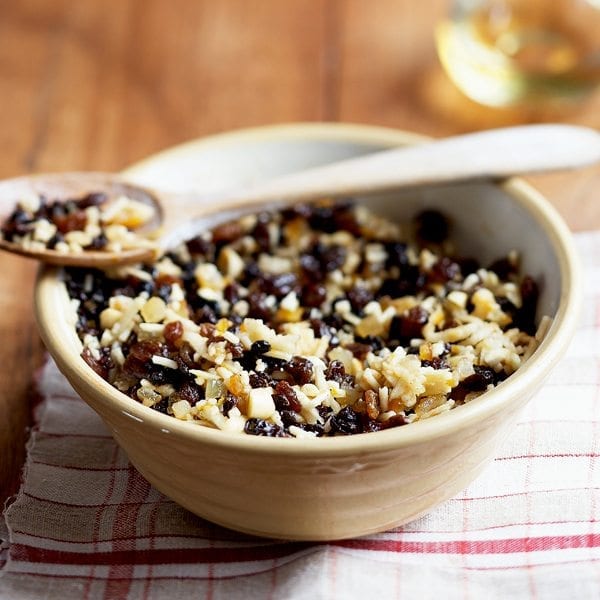
The beauty of mincemeat is that its main ingredients start out in the balmy days of summer. Firm-fleshed grapes become succulent raisins and sultanas, then citrussy lemons and oranges mellow to supply candied peel. To these are added autumn’s apples and even plums, plus the warming spice of nutmeg, ginger and cinnamon. So mincemeat is the culmination of a whole year’s produce – an apt filling for this time of year, when we reminisce, catch up with friends and ring the changes.
Mince pies don’t have to be just for Christmas, though. If you felt so inclined, you could reinstate the tradition of making and giving Coventry god cakes – mincemeat-filled triangular puff pastry pies, which were given by the city’s godparents to their godchildren at New Year or Easter. Or spoon mincemeat into cored cooking apples and oven-bake until golden and tender.
Who ate all the pies?
Mince pie fan Stephen Greenslade has taken his appreciation to another level. In 2006 he started the Mince Pie Club at work. What started out as a comparison between a few shop-bought mince pies has turned into a crusade – and every year the club tastes and rates a trolley’s-worth of festive treats.
Custom dictates you should eat a mince pie on every day of the 12 days of Christmas – to refuse one is supposed to be unlucky. Competitors in the annual Big Eat mince pie-eating competition held in Wookey Hole, Somerset, each November eat rather more than the traditional 12 pies. The record stands at 46 in 10 minutes. Now that’s something to think about as you contemplate your fourth pie on Christmas Day…