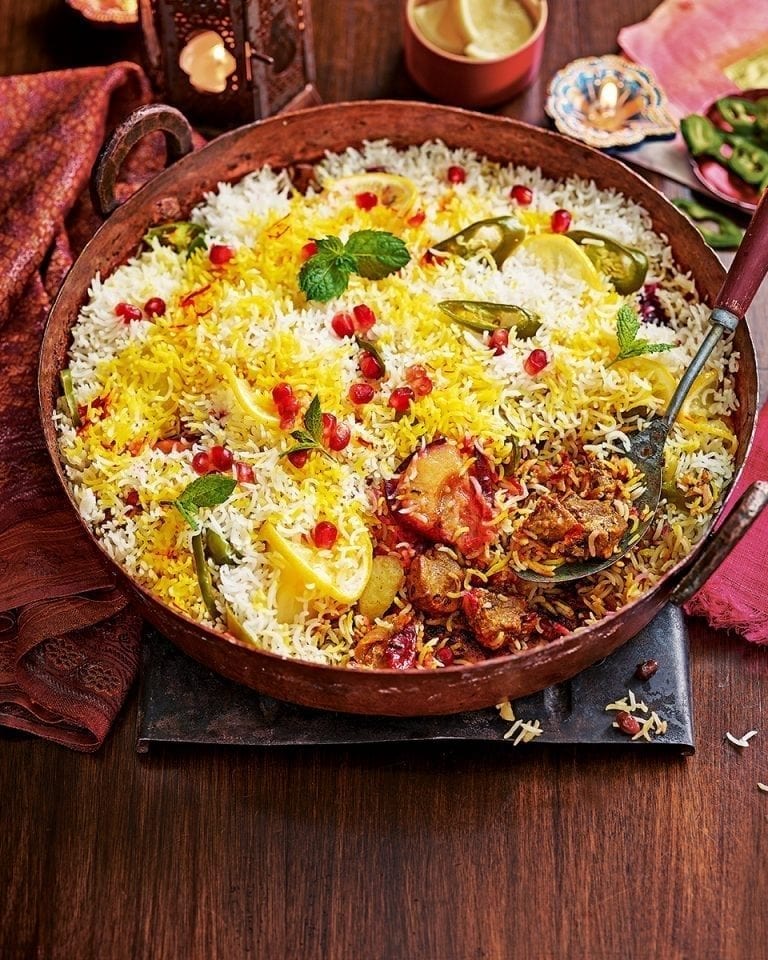
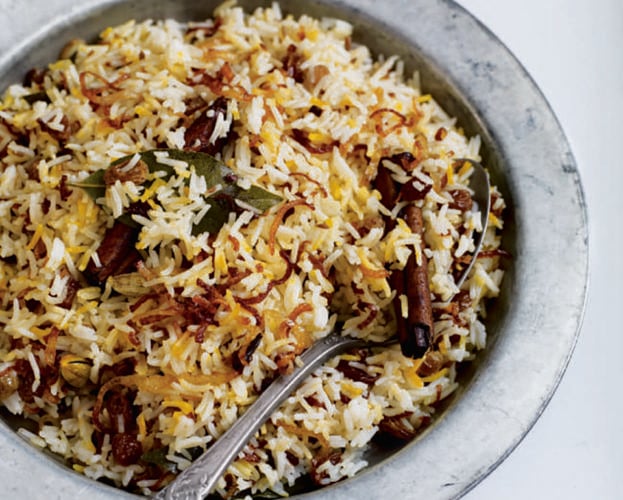
Learn how to achieve succulent meat, fluffy rice and the perfect blend of spice with food writer Sumayya Usmani’s step-by-step guide to making perfect lamb biryani.
“This dish is traditionally made with mutton, but you can use diced shoulder of lamb if you prefer,” says Sumayya. “My recipe is based on a Pakistani biryani from the Sindh province where it’s made with soured yogurt and dried sour plums. I like to substitute local produce and I’ve found that using fresh unripe plums works well with a handful of fresh pomegranate seeds – the fresh ones are easier to find than the dried seeds used in Pakistan. Sindhi biryani is a celebratory dish and it’s one that brings back special memories for me.”
Make our best-ever chicken biryani next.

Ingredients
- 400g basmati rice
- 1 large potato, cut into 8 pieces
- 1 thin green chilli, finely chopped, plus 2-3 sliced green chillies
- Bunch fresh coriander, chopped
- ½ large bunch fresh mint, chopped
- 400g full-fat natural yogurt, soured with the juice of ½ lemon, plus extra
- ½ tsp ground turmeric
- 450g mutton or lamb leg or shoulder, cut into chunks
- 2 dried bay leaves
- 3cm cinnamon stick, broken in half
- 2 whole star anise
- 2 black cardamom pods (see Cook Smarter; or use extra green)
- 2 tbsp sunflower or corn oil
- 1½ tbsp ghee, plus 1 tbsp melted ghee (or use melted butter)
- 4 green cardamom pods, crushed
- 1 tsp coriander seeds
- 1 tsp black cumin seeds (or use cumin seeds), see Know-how
- 1 small mace blade
- 3 onions, roughly sliced
- 1 tbsp grated ginger
- 1 tbsp crushed garlic
- 4 large tomatoes, finely chopped
- 5 unripe plums, halved and stoned
- 4 tbsp fresh pomegranate seeds
- 2 large pinches saffron, soaked in hot water for 15 minutes
- ½ lemon, thinly sliced
You’ll also need…
- Shallow casserole with a tightly fitting lid
Method
- Wash the rice 3 times in cold water, then put in a mixing bowl and cover with more water. Soak for at least 30 minutes. Cook the potato in a pan of boiling water for 8 minutes (until barely tender), drain and set aside.
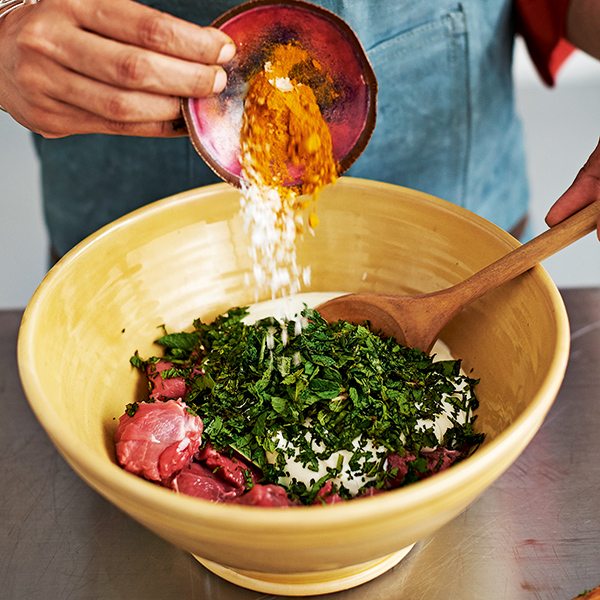
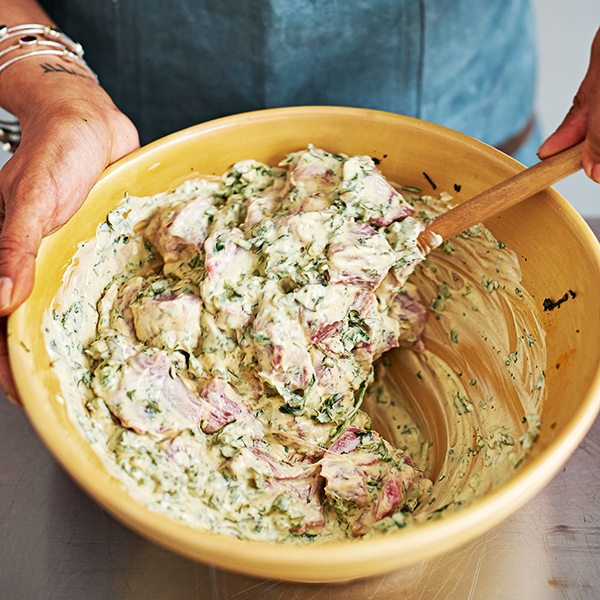
- Mix the chopped chilli, most of the fresh herbs, the soured yogurt, turmeric and a pinch of salt in a large bowl with the meat, then marinate for 30 minutes or so.

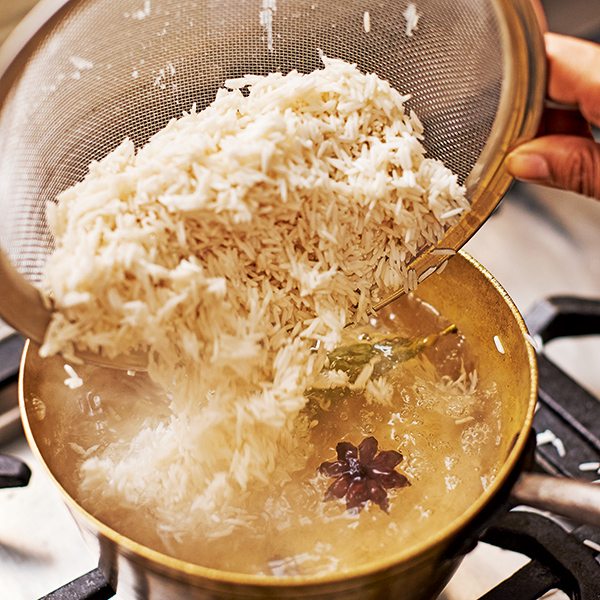
- Meanwhile, boil a large pan of water and add ½ tsp salt, 1 bay leaf, half a cinnamon stick, 1 star anise and 1 black cardamom pod. Drain the rice and add to the pan. Cook for 5-6 minutes, then drain and leave in the colander (discard the flavourings).
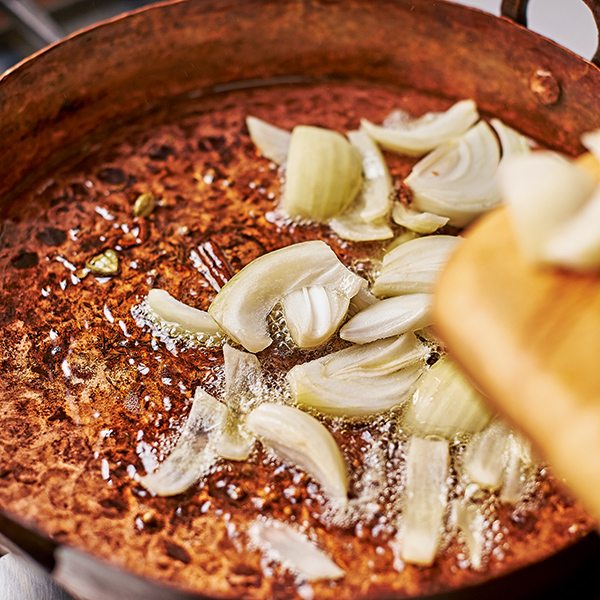
- Heat the oil and 1½ tbsp ghee over a medium heat in a shallow lidded casserole. Once hot, add the rest of the whole dried spices and cook for 30-40 seconds until aromatic. Add the onions and cook for 10-15 minutes, stirring, until softened. Add the ginger and garlic and cook, stirring, for 1-2 minutes.
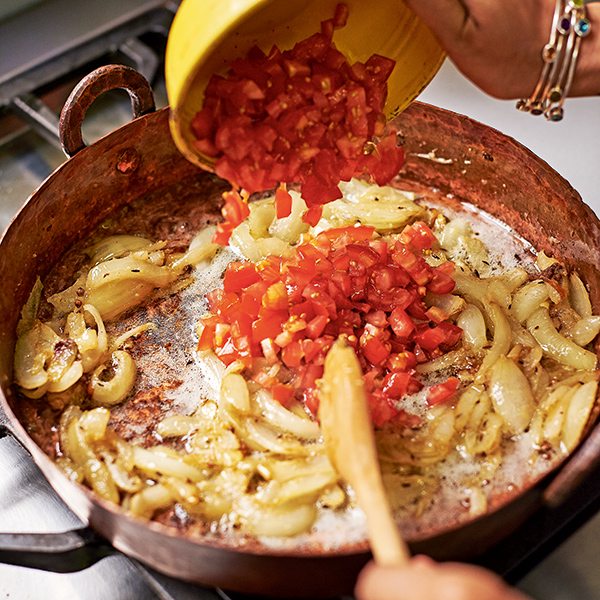
- Add the tomatoes to the pan and cook for 12-15 minutes, stirring, to evaporate most of their juices.
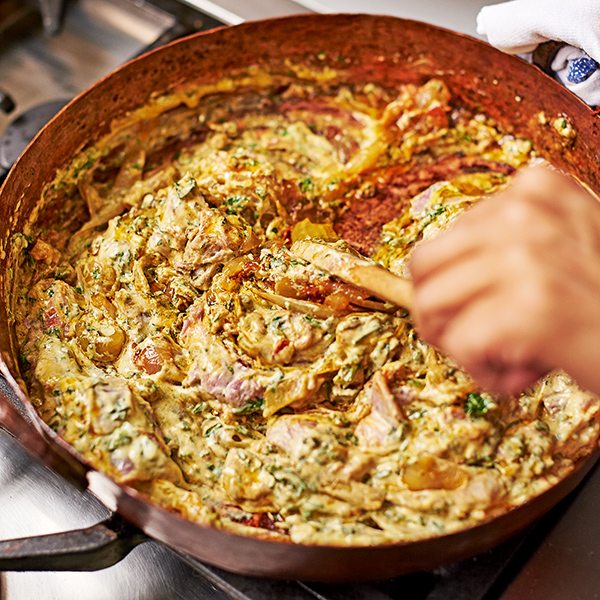
- Stir in the mutton/lamb mix and cook for 20-25 minutes until the sauce is thick and the oil rises to the top. Turn the heat to low, cover with the lid and cook for 25-30 minutes or until the meat is tender.
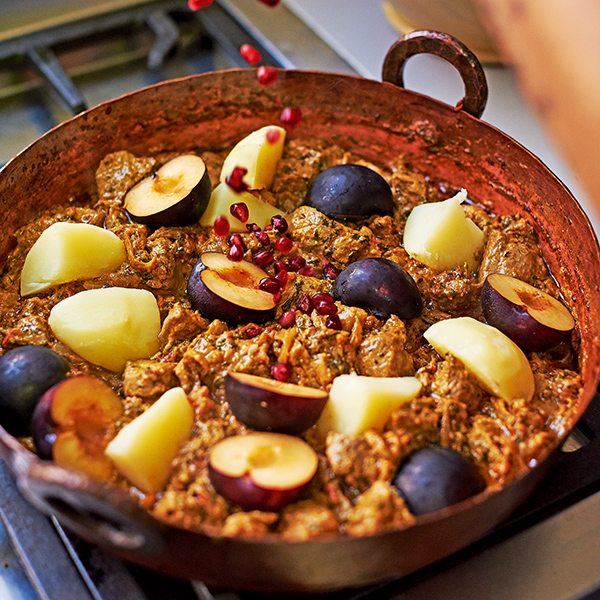
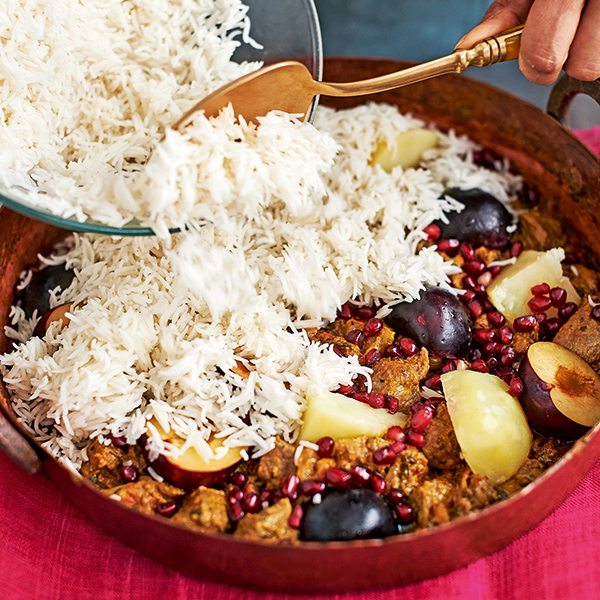
- Uncover and lay the plum halves and potatoes evenly over the curry, then scatter over the pomegranate seeds. Cook, uncovered, for 2-3 minutes. Turn off the heat and cover evenly with the rice. Sprinkle with the saffron and its water and the melted ghee. Push the green chilli and lemon slices into the rice.
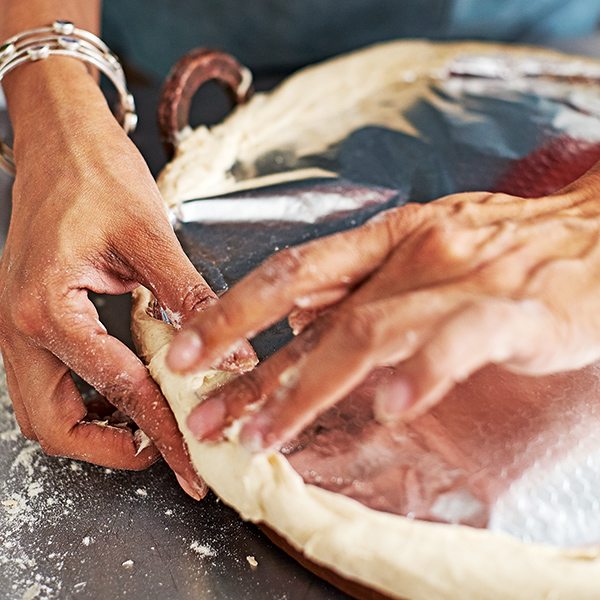
- Cover tightly with foil, then wrap your lid in a clean tea towel (tie the ends around the handle, away from the flame) and fit it snugly on top of the dish so it’s sealed (See Before you start for how to seal with dough).
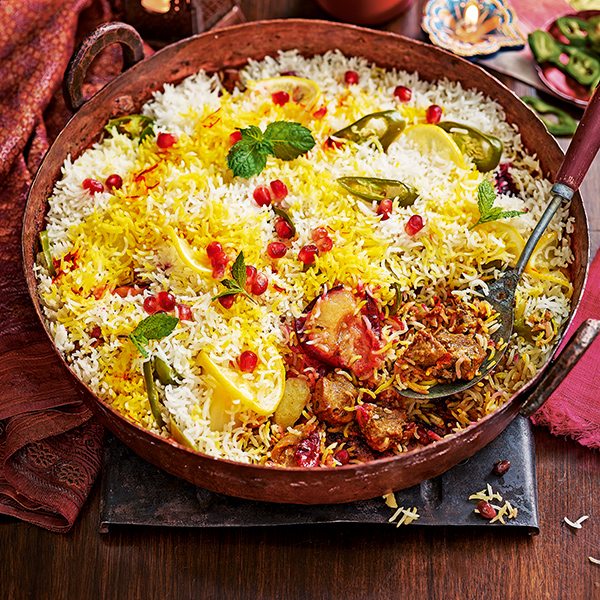
- Put the biryani on the lowest heat (see tips) and cook for 15 minutes. To check, open the seal – the rice should have fluffed up and cooked through. If not, re-cover and cook for a further 5 minutes. When ready to serve, carefully stir the rice to mix the layers, sprinkle with the remaining herbs and serve with extra yogurt.
Nutrition
- 623kcals Calories
- 18.8g (8.1g saturated) Fat
- 28.1g Protein
- 82.1g (18g sugars) Carbs
- 6.7g Fibre
- 0.3g Salt




Rate and review
Rate
Reviews

Wow, fantastic biryani recipes. Can’t wait to get cooking!








Leave a comment, question or tip