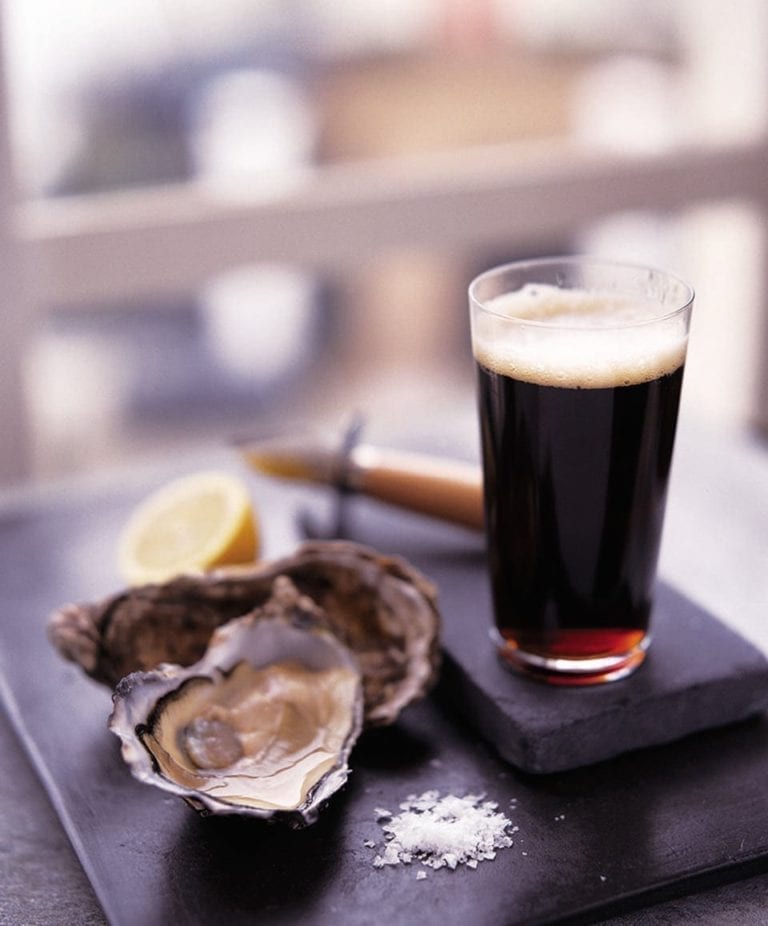
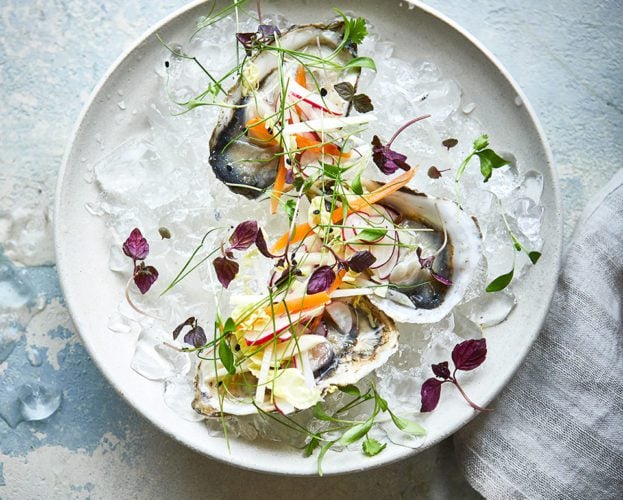
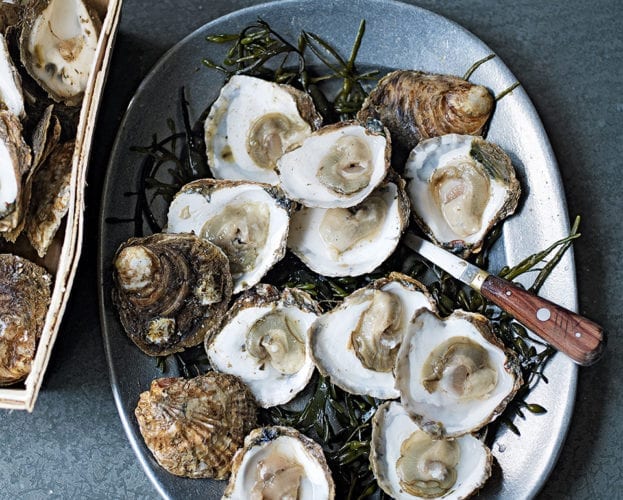
Is there an ‘r’ in the month? Oysters are at their best from September to April. And if you like oysters then you’ll love this simple combination of salty shellfish and a refreshing pint of stout. This recipe also includes comprehensive instructions on how to shuck oysters.

Join Extradelicious to unlock Cook Mode
Ingredients
- 3 bottles of stout
- Six oysters
Join Extradelicious to unlock Cook Mode
Method
- Don’t open oysters until you want to serve them.
- When you are ready, wrap one of your hands in a tea towel and hold the oyster in it, with the flat shell facing up. Push the oyster knife into the hinge (at the narrowest end) and, using some force, wiggle the blade until the hinge gives and you can slide the blade between the shells. Lift the top shell up with the blade and sever the ligament attaching the oyster to the top shell. Remove the top shell. Keep the bottom shell upright, to avoid losing any of the juices. Slide the blade beneath the oyster to loosen it from the shell and pick out any little bits of shell from the juices.
- Serve with a glass of stout from one of the many new British microbreweries: try Hambleton Nightmare – rich, smooth and creamy with a huge amount of flavour – or Itchen Valley Treacle Stout – rich, well-bodied and brewed with roasted barley and chocolate.
Leave a comment, question or tip