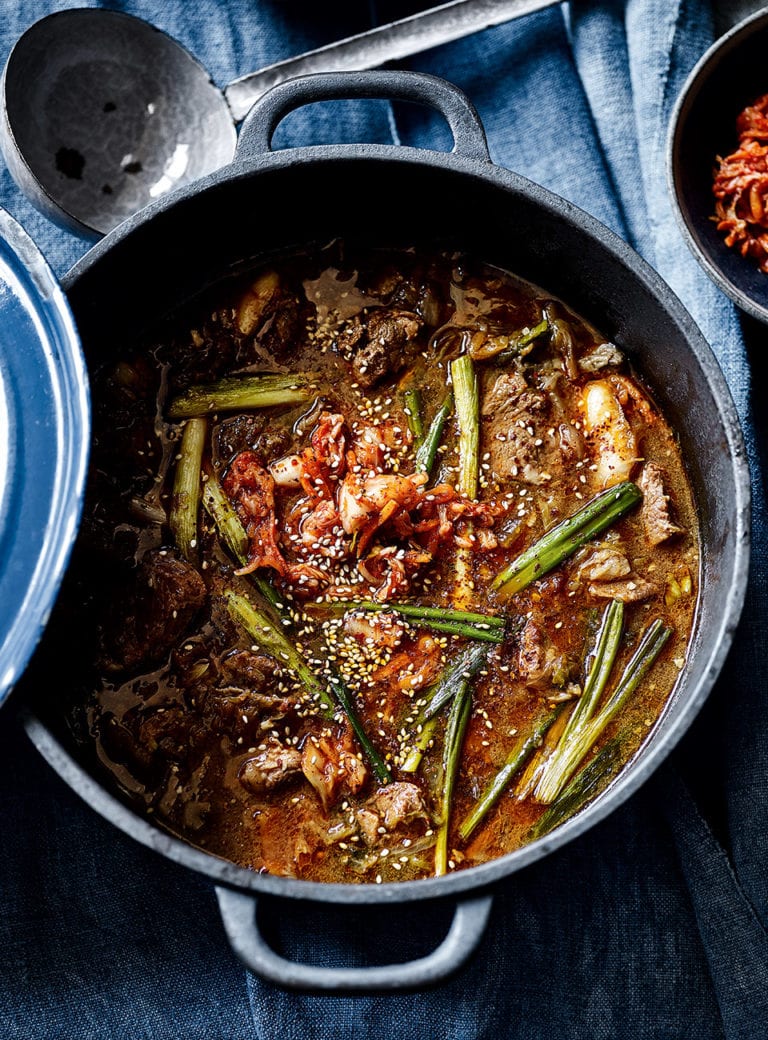

This recipe does require a few specialist ingredients, but they’re easy enough to find in large supermarkets or Asian grocers. The result is a deeply spiced, slow-cooked pork casserole with the pickled sharpness of kimchi.
Try more recipes with kimchi.

Join Extradelicious to unlock Cook Mode
Ingredients
- 1kg boneless British free-range pork shoulder, cut into 3-4cm chunks
- 2 tbsp gochujang chilli bean paste (see Know-how)
- 2 tbsp doenjang soya bean paste or miso paste (see Know-how)
- 2 tbsp olive oil for frying
- 2 onions, sliced
- Bunch spring onions, trimmed and halved lengthways
- 4 garlic cloves, sliced or chopped
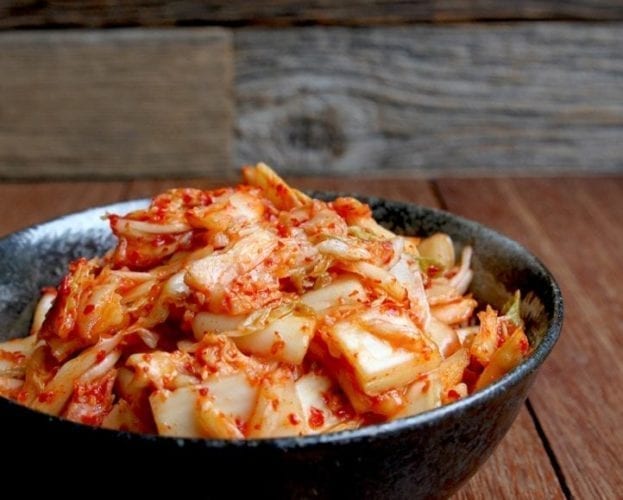
- 200-250g jar kimchi, plus extra to serve (optional); we like Cultured Collective and Yutaka
- 2 tsp oyster sauce
- 15g dried porcini mushrooms, soaked in enough boiling water to cover
- Toasted sesame oil to drizzle
- Soy sauce to drizzle
- 2-3 tbsp sesame seeds to serve
- Gochugaru (see Know-how) or other sweet pepper flakes for sprinkling
You’ll also need …
- Large casserole with a lid; sheet of compostable non-stick baking paper
Join Extradelicious to unlock Cook Mode
Method
- Heat the oven to 150°C/130°C fan/gas 2. Put the pork in a large glass or ceramic bowl and mix with the gochujang and doenjang/miso. Set aside
to marinate for 30 minutes. - Meanwhile, heat the oil in the casserole, then add the sliced onions and half the spring onions. Fry gently over a low heat for 12-15 minutes until soft, stir in the garlic, then cook for another minute.
- Stir the marinated pork into the onions in the casserole. Stir in the kimchi, oyster sauce, porcini and all but the last 1cm of soaking liquid (discard this as it will be gritty). Rinse out the kimchi jar with 100ml water and add that to
the casserole with a further 500ml water. Bring up to a fast simmer, then scrunch up a piece of wet baking paper, open out and sit this on top of the stew. Cover with the lid, then transfer to the oven and cook for 2 hours (the baking paper minimises water evaporation/condensation and keeps the temperature steady, even in a low oven). - Remove the casserole from the oven, discard the baking paper and give the stew a good stir. Add the remaining spring onions, return to the oven and cook, uncovered, for a further 30 minutes to 1 hour until the stew has reduced and the meat is fall-apart tender.
- Serve the stew drizzled with sesame oil and soy sauce, and scattered with sesame seeds and gochugaru, with extra kimchi on the side, if you like.
Nutrition
- 261kcals Calories
- 11.8g (2.8g saturated) Fat
- 29.9g Protein
- 7.9g (4.2g sugars) Carbs
- 2.1g Fibre
- 1.2g Salt



Leave a comment, question or tip