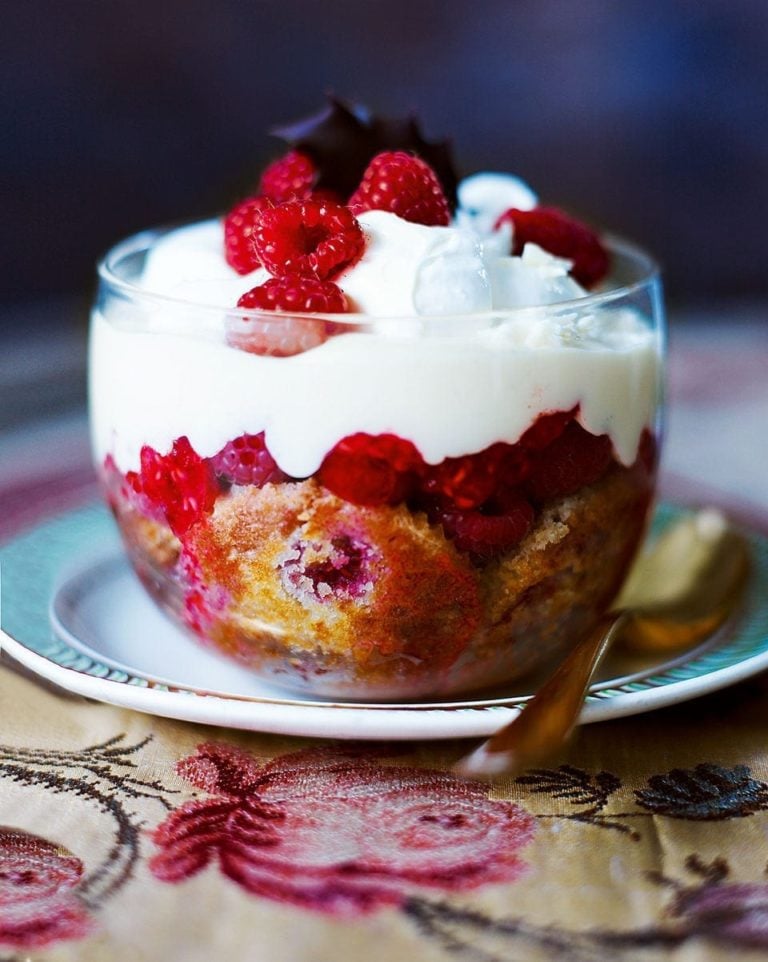
A special trifle recipe made with homemade fairy cakes, raspberries, mascarpone, amaretto and white chocolate.

Join Extradelicious to unlock Cook Mode
Ingredients
- 115g caster sugar
- 115g softened butter
- 2 large free-range eggs
- 115g self-raising flour
- 200g white chocolate, chopped
- 450g fresh or frozen raspberries, plus extra for decorating
- 3 tbsp icing sugar
- 250ml double cream
- 300g mascarpone
- 100ml amaretto liqueur
- 500ml thick, ready-made custard
- 100g plain chocolate
Join Extradelicious to unlock Cook Mode
Method
- Preheat the oven to 190°C/fan 170°C/gas 5. Cream together the caster sugar and butter until light and creamy. Add the eggs, 1 at a time, mixing well after each addition. Sift over the flour and fold in gently. Stir two-thirds of the white chocolate into the batter along with a quarter of the raspberries. Place 12 fairy cake cases in a bun tin and half-fill each with the batter. Bake for 12–15 minutes, until golden brown.
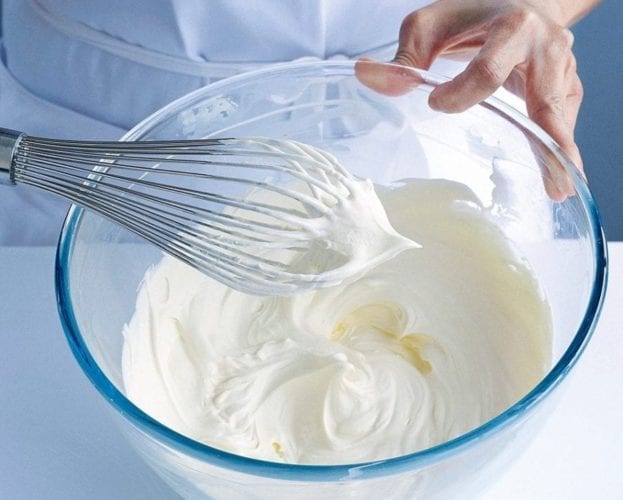
- Lightly crush half the remaining raspberries with 1 tbsp icing sugar in a bowl and set aside. In a bowl, briefly whisk the cream, mascarpone and the remaining icing sugar together until just combined and smooth.
- Discard the fairy cake cases, halve the cakes horizontally and use to cover the bottom of a large glass dish, pressing each cake against the side so that there are no gaps (freeze any leftover cakes for up to 3 months). Pour the amaretto over the cakes and top with crushed and whole remaining raspberries and the remaining white chocolate. Top with the custard, then spoon over the mascarpone cream.
- Melt the chocolate in a bowl over a pan of simmering water and use a clean paint brush to brush 2 coats of chocolate onto clean, flat holly leaves. Leave to set, then gently peel away the leaf. Use to decorate the trifle along with the extra raspberries.
Nutrition
- 872kcals Calories
- 59.6g (35.7g saturated) Fat
- 10.5g Protein
- 73.7g (57.8g sugars) Carbs
- 0.6g Salt
Leave a comment, question or tip